Egypt
Urban green infrastructure and landscape design for cooling and water re-use in Cairo
Socio-ecological Context
Intense urbanisation, a population of around 25 million, and increasing environmental stress. Those are just some of the factors forming Cairo’s socio-ecological context. Rising temperatures, degradation of natural systems, reduced precipitation, and extreme weather events are intensifying urban heat island effects, pollution levels, and challenging the resilience of already overburdened infrastructure. Therefore, the city faces limited access to clean water and green spaces.
Climate- and Water-related Challenges
Rapid urban expansion, industrial development, population pressure, and dependence on the Nile River have placed severe strain on the city’s water resources. Landscape irrigation presents a particularly acute challenge. While beneficial, urban green spaces are major freshwater consumers when not managed efficiently. Plus, traditional landscape designs often rely on non-native water-intensive species, further straining already limited water resources.
Nature-based Solution
The NbS focuses on the integrated implementation of Urban Green Infrastructure
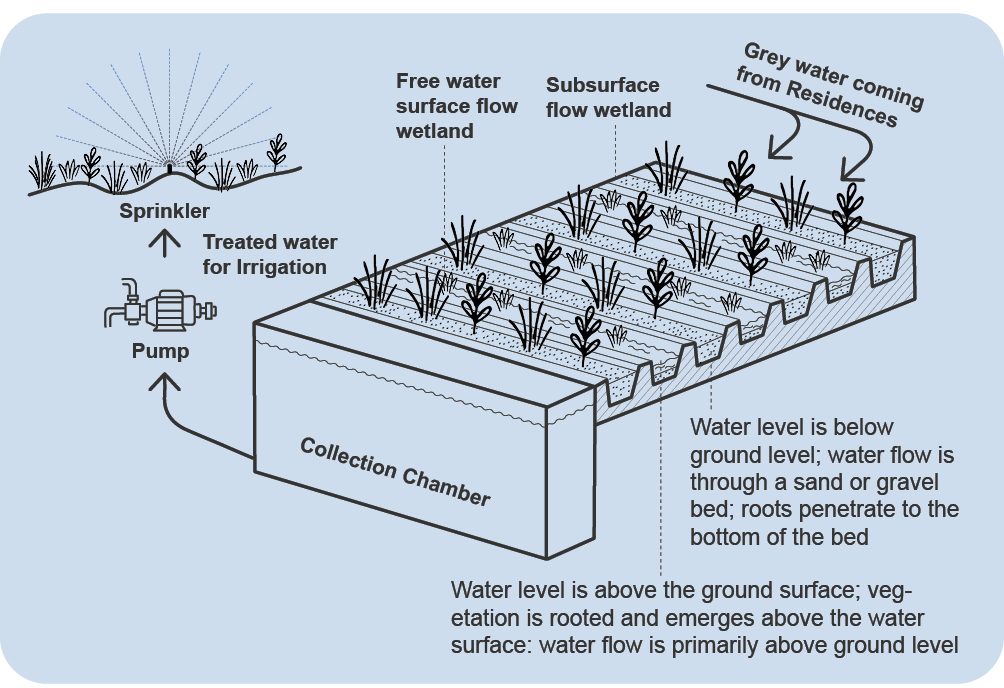
(UGI) and innovative landscape design principles, with a hybrid water reuse system through greywater treatment and constructed wetlands in Badya, a location in Greater Cairo. This approach demonstrates synergistic benefits of water reuse, decentralised water management, and water-wise landscaping. It enhances ecological connectivity, water resilience, climate comfort, and social livability, creating a model for sustainable urban expansion in arid megacity contexts.
Impacts
The demonstration site will deliver measurable environmental, socio-economic, and climate resilience benefits, positioning it as a leading model for sustainable urban development in arid environments such as Cairo. These impacts range from improved water use efficiency, cleaner air, enhanced biodiversity, and greener public spaces to stronger community and resilience to climate change.
Acknowledgement of EU funding
Funded by the PRIMA Foundation (co-funded by the European Union and the Participating States). Views and opinions expressed are, however, those of the author(s) only and do not necessarily reflect those of the European Union or the PRIMA Foundation. Neither the European Union nor the granting authority can be held responsible for them.
Privacy Policy | Legal Notice | Imprint