Lebanon
Demonstrating constructed wetland for water pollution control between Ostoane river and Al Kabir river in Akkar
Socio-ecological Context
Akkar faces wildfires, pollution, logging, and urbanisation. The region has high poverty, unemployment, and illiteracy, relying on small-scale agriculture, fishing, and informal labour with limited infrastructure. Its young population and a high concentration of Syrian and Palestinian refugees create additional pressure
Climate- and Water-related Challenges
Prolonged droughts are becoming more frequent, while extreme weather events increase the risk of flooding, and water quality is deteriorating. These issues are worsened by unsustainable water management practices. The situation is further exacerbated by limited societal acceptance of wastewater reuse and its integration into landscapes, posing barriers to the adoption of sustainable, circular water solutions.
Nature-based Solution
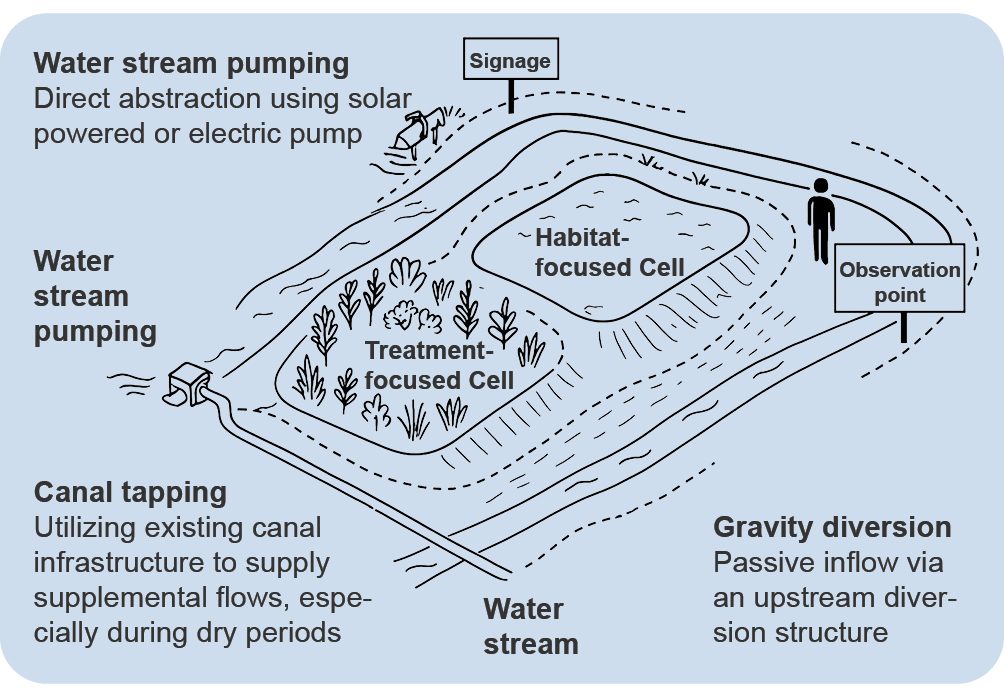
The NbS introduces a constructed wetland between the Ostoane River and Al Kabir River basin to treat municipal wastewater. The system is designed to replicate biological, chemical, and physical processes of natural wetlands. Besides improving water quality, it provides habitat for local species. The implementation is cost-effective and offers educational opportunities. The treated wastewater can be used for agriculture and landscaping, non-potable urban uses and ecosystem restoration, offering both environmental and economic benefits.
Impacts
The constructed wetland is expected to advance sustainable water management. It will significantly improve water quality and availability by treating municipal wastewater, contributing to more integrated water resources management and reducing dependence on freshwater sources. The system enhances resilience to drought, while restoring local ecosystem services and supporting biodiversity.
Acknowledgement of EU funding
Funded by the PRIMA Foundation (co-funded by the European Union and the Participating States). Views and opinions expressed are, however, those of the author(s) only and do not necessarily reflect those of the European Union or the PRIMA Foundation. Neither the European Union nor the granting authority can be held responsible for them.
Privacy Policy | Legal Notice | Imprint